What does a Golden Harbour listing actually price? Not the finishes. Not even, in most cases, the structure standing on the lot. Walk the five streets that make up this Intracoastal enclave in East Boca Raton and you'll notice something the median price never explains on its own: the homes vary wildly in age and style, from 1960s Old Florida ranches to brand new three-story Mediterranean builds, yet the lots themselves carry a floor value that has almost nothing to do with what's built on them. The price tag here is really pricing three separate things, and they move independently of each other. Getting them confused is how a buyer ends up disappointed by a dock, a seawall, or a renovation budget they didn't see coming.
The Land Is The Product, Not The House
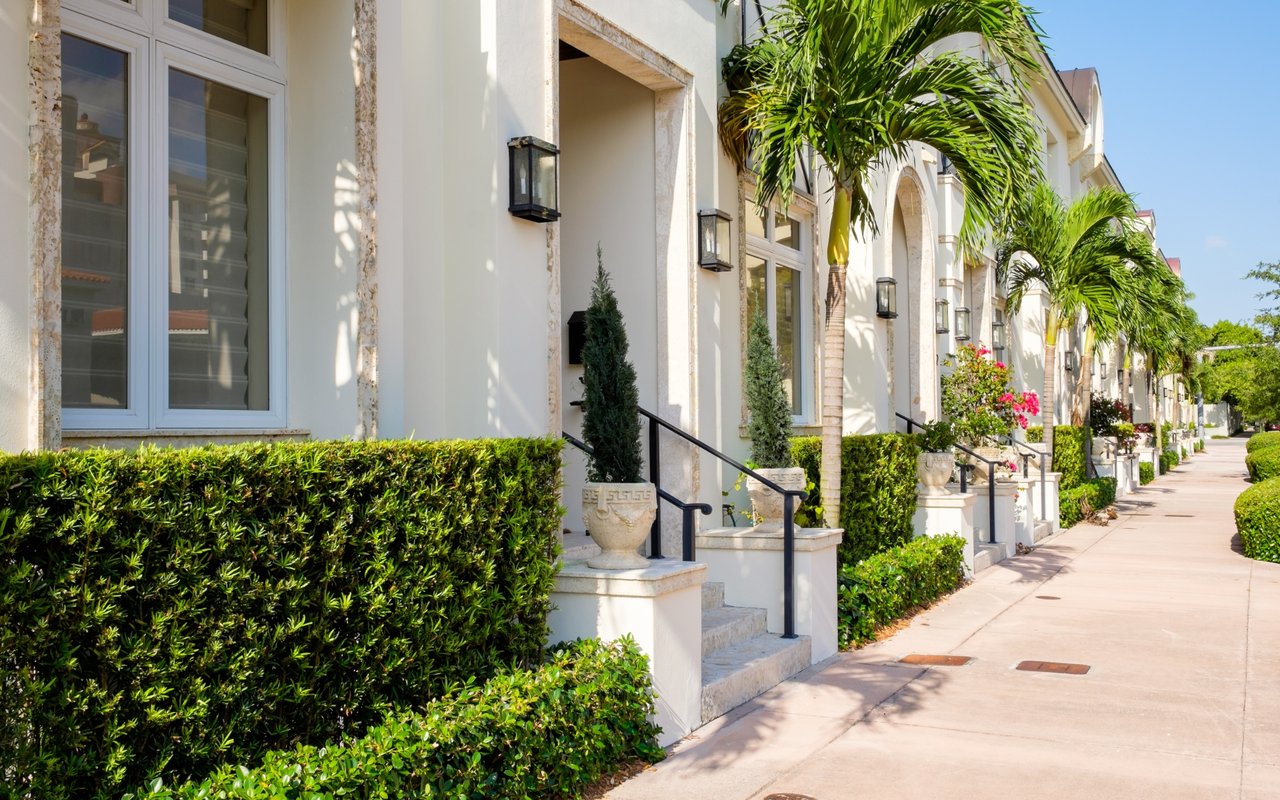
Golden Harbour was developed in the 1960s on deep water canals just north of the Palmetto Park Road bridge, and East Boca has had almost no buildable raw land available for decades. That scarcity has pushed the market into a pattern that repeats across the neighborhood's roughly 100 to 111 waterfront lots, depending on which count you use: a legacy single-story home gets purchased for the ground it sits on, not the square footage inside it, then demolished and replaced.
Land on a deep-water Golden Harbour lot is currently trading in the $3.1 million to $4.5 million range before a single wall goes up, while completed waterfront estates built on that same class of lot are listing between $6 million and $22.5 million. That is not a renovation premium. It is the cost of replacing a structure that was never the point of the purchase.
The gap is easier to see next to a dry-lot comparison in the same part of the city. In Boca Villas, the adjoining district without water frontage, entry-level teardown lots run $1 million to $2 million, with completed custom estates on those same lots listing between $5 million and $10.9 million. The multiplier from raw lot to finished estate is similar in both places. What changes the math entirely is what the lot sits on: dry ground in Boca Villas, or a private dock with ocean access in Golden Harbour.
| Legacy home, land value only | Completed estate on same lot class | |
|---|---|---|
| Golden Harbour (waterfront) | $3.1M – $4.5M | $6M – $22.5M |
| Boca Villas (dry lot, East Boca) | $1M – $2M | $5M – $10.9M |
If you're pricing a Golden Harbour home the way you'd price a house anywhere else, on a dollar-per-square-foot basis against the interior, you're measuring the wrong variable. The number that matters is what the water behind the house can actually do for you, which brings up the part of the price tag that never shows up in listing photos.
Not Every Golden Harbour Address Comes With The Same Water
"Golden Harbour" and "deep water" get used almost interchangeably in marketing copy, but the community itself isn't uniform. A handful of the neighborhood's lots, roughly six by most counts, don't carry true deepwater frontage despite sitting inside the same five named streets as the rest of the enclave. Buying "in Golden Harbour" and buying "on Golden Harbour deep water" are not the same purchase, and the difference doesn't always announce itself in a listing headline.
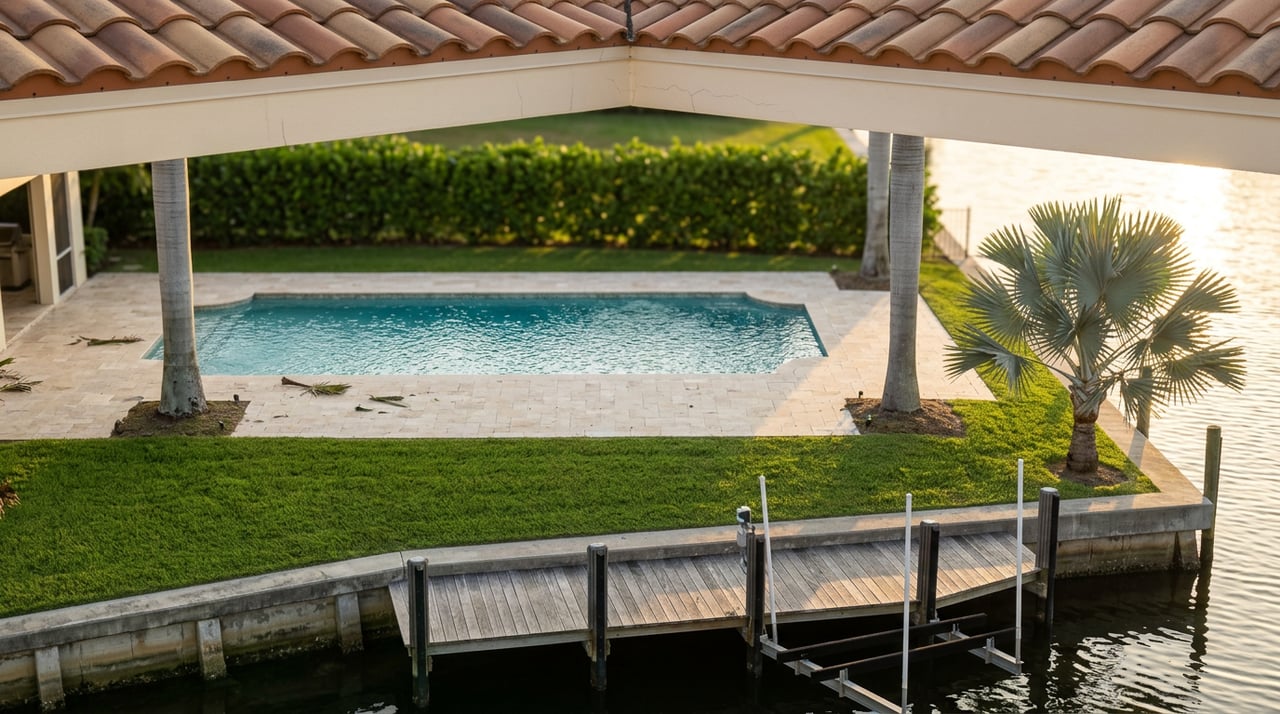
For the lots that do have direct frontage, the water itself has real, usable characteristics that change what boat you can keep. The section of the Intracoastal that runs past Golden Harbour is a year-round no-wake zone with no fixed bridges between the community and the Atlantic, roughly two miles to the Boca Inlet. Homes closest to the Intracoastal edge can typically accommodate vessels up to about 80 feet. Move further into the interior canals and that capacity narrows with the water depth. None of this is disclosed as a number on a listing sheet. It has to be asked about, lot by lot, before an offer goes in if a boat of a specific size is part of the plan.
The Seawall Is The Inspection Item Nobody Schedules
Here is the part of the Golden Harbour purchase that catches buyers off guard most often, because a standard home inspection was never built to look for it. The seawall holding back the canal behind the house is a structural asset with its own age, its own material, and its own failure timeline, and it sits entirely outside the scope of what a general inspector checks.
Golden Harbour's seawalls vary by section and by age. Marine contractors who work the community describe older timber walls in some stretches as at or past the end of their serviceable life, warranting immediate inspection rather than a routine one. The protected canal conditions that make Golden Harbour comfortable for boating, calmer water, less wake exposure than open Intracoastal frontage, also make it a place where vinyl sheet pile seawalls perform well and are commonly used. Direct Intracoastal frontage, by contrast, sees enough wake energy from vessel traffic that precast concrete construction is the more typical material there. A wall built for one condition doesn't necessarily hold up if the property's actual exposure changes, and forty to fifty years of saltwater exposure is common across the neighborhood's original construction.
The industry standard offered by seawall contractors serving Boca Raton is an annual professional assessment given the storm season and boat traffic the Intracoastal carries. Warning signs worth asking a seller or inspector about directly include visible cracks in the cap or wall panels, soil depressions behind the wall, leaning or bowing sections, rust staining, and water seeping through unexpectedly. A seawall in poor condition is a real, uninsured liability that a buyer can carry forward into ownership without ever knowing it was there, because it doesn't fail the way a roof or an AC unit fails. It fails quietly, underwater, until it doesn't.
What This Changes About Writing An Offer
If you're planning to buy the house as is, the seawall and dock condition belong in your due diligence period the same way roof age or AC condition would anywhere else, just handled by a marine contractor rather than a general inspector rather than assumed away because the listing photos show calm water and a nice dock.
If you're planning to buy the land and rebuild, which is the more common path on Golden Harbour's legacy inventory, the cost conversation shifts again. Boca Raton assesses a base permit fee of 1.6 percent of total job valuation on new construction, which on a $3 million custom build works out to roughly $48,000 before plan review deposits, engineering fees, and tree trust payments are added. That number belongs in the same budget line as the seawall assessment, because a rebuild plan that doesn't survive the numbers doesn't matter how good the underlying lot is.
Either way, the questions worth asking before a contract goes hard are the same three: What is the actual water depth and frontage type at this specific address, not the community average? What material and age is the seawall, and when was it last inspected? And if a rebuild is part of the plan, has the permit math been run against the real job valuation rather than an estimate pulled from a different project.
FAQ
Does every home in Golden Harbour have true deepwater access? No. Most of the community's roughly 100 to 111 lots have deepwater frontage, but a small number, around six, do not carry true deepwater access despite being inside the neighborhood boundaries. Confirming frontage type for a specific address is a due diligence step, not an assumption.
How do I find out what condition a seawall is in before making an offer? A standard home inspection does not typically evaluate a seawall's structural condition. A pre-purchase marine assessment from a licensed contractor, sometimes including an underwater dive component for older walls, is the way buyers verify this before closing rather than after.
Why do so many Golden Harbour homes get demolished after purchase? East Boca Raton has almost no remaining raw waterfront land, so infill redevelopment, buying an older structure for the lot and rebuilding, has become the primary way new construction enters the neighborhood. Builders active in the community in recent years include Empire Development and Alpha Premium Development, both of which have completed or delivered new estates on legacy Golden Harbour lots.
If you're weighing a Golden Harbour purchase against another East Boca waterfront address, the conversation worth having before you write an offer is about the lot's actual water characteristics and the seawall's real condition, not just the finish level of the house standing on it today. Maximo Cortese works through that verification process with buyers directly. Schedule a free consultation to start with the questions that matter for the specific address you're considering.
This article is general information, not legal, tax or financial advice. Consult a qualified professional about your situation.