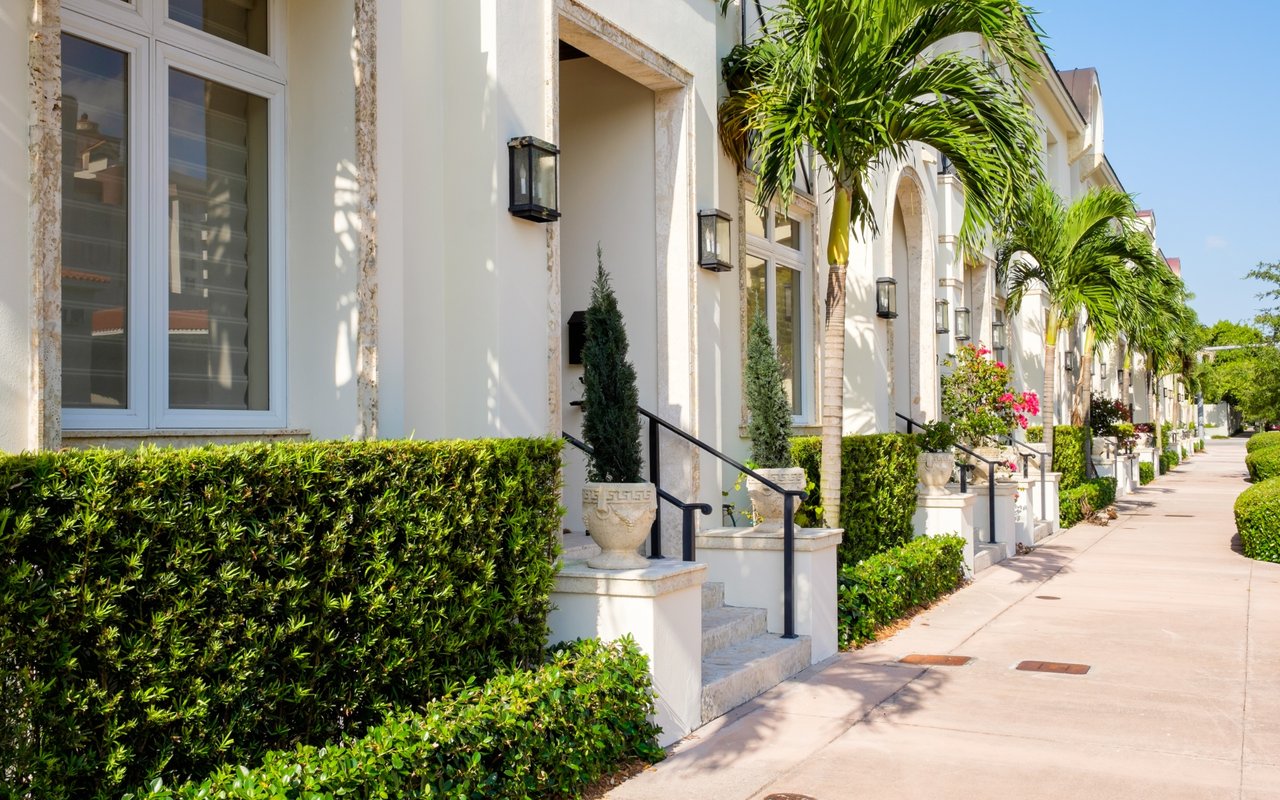
Wondering what it’s really like to live in one of Boca Raton’s most historic neighborhoods? Old Floresta stands out because it offers more than just attractive homes. It gives you a preserved sense of place, a distinct architectural identity, and a lifestyle shaped by trees, garden spaces, and thoughtful planning. If you are considering buying or selling here, this guide will help you understand what makes Old Floresta special and what trade-offs come with that charm. Let’s dive in.
Old Floresta at a Glance
Old Floresta is widely recognized as a foundational part of Boca Raton’s history. It was tied to the Mizner Development Corporation’s 1925 Boca Raton project, and it later became the city’s first locally designated historic district in 1990.
The district is located north of Palmetto Park Road between Paloma and Cardinal Avenues. That location matters because it places you close to central Boca Raton amenities while still offering a residential setting with a noticeably different rhythm and character.
What makes Old Floresta especially important is that it remains one of the few surviving pieces of Addison Mizner’s early vision for Boca Raton. In practical terms, that means you are not just looking at older homes. You are looking at a neighborhood with real historical continuity.
Old Floresta Architecture
Mizner’s original design vision
Old Floresta began as a 29-house Mizner subdivision. According to the Boca Raton Historical Society and National Register documentation, these homes were designed as part of the city’s 1920s development era and remain closely tied to that original concept.
The homes are primarily Mediterranean Revival and Spanish Mission influenced. You will often see rough stucco walls, clay barrel-tile roofs, arched openings, wrought-iron details, casement or French doors, and shaded outdoor living areas.
Why the homes feel unique
One reason Old Floresta feels cohesive without feeling repetitive is that Addison Mizner did not simply reuse one plan across every street. National Register documentation notes that he created ten different house plans and placed them so no street had more than one example of the same plan.
That design choice still shapes the neighborhood today. As you move through Old Floresta, the homes relate to each other in style and scale, but they do not feel copied and pasted.
Built for South Florida living
The architecture here was shaped by climate as much as aesthetics. Historic records describe large rooms, high ceilings, French doors, and multiple openings designed to capture breezes and connect indoor and outdoor spaces.
You also see details like loggias, terraces, private patios, and secluded courts. In some of the smaller homes, Mizner even used dining alcoves instead of formal dining rooms, which gives you a clue about how these homes were intended to live: comfortable, airy, and oriented toward everyday indoor-outdoor use.
Estate-like details that still matter
Some of the best-known historic homes in Old Floresta show the level of craftsmanship that defines the area. Features documented in the Aiken House include front loggias, curved stairways, pecky cypress ceilings, and garage or guest-house arrangements, along with outdoor elements such as pools and gazebos.
That is part of why Old Floresta often feels more like a composed garden estate district than a typical suburban neighborhood. Even when homes vary in size or condition, the setting and design language create a strong sense of identity.
Streetscape and Setting
Narrower streets, softer feel
Old Floresta was planned to feel intimate from the start. National Register records note that street widths were reduced from 60 feet to 40 feet to create the effect of country lanes.
That design decision still influences how the neighborhood feels today. The streets tend to read as quieter and more human-scaled than wider, more conventional residential roadways.
A garden-oriented neighborhood
The plant-inspired street names, including names like Alamanda, Hibiscus, and Oleander, reinforce the neighborhood’s original planning concept. This was meant to be a place where landscaping, outdoor living, and architecture all worked together.
That idea still holds up. Old Floresta’s look comes from a combination of historic street design, garden-oriented homes, and Boca Raton’s long-standing emphasis on tree protection and canopy preservation.
Tree canopy adds to the character
The City of Boca Raton notes that it has been a Tree City USA for 46 years and adopted one of the first tree protection ordinances in the United States in 1965. While that citywide policy is broader than Old Floresta alone, it helps explain why mature landscaping and shade remain such an important part of the local visual experience.
If you are drawn to neighborhoods that feel established, green, and less exposed than newer developments, this is a meaningful part of Old Floresta’s appeal.
How the Neighborhood Evolved
Old Floresta is not frozen in time. While the original Mizner homes define the neighborhood’s identity, the district also includes later additions.
After World War II, 70 additional houses were added in a range of styles. That means the area now includes a mix of original 1920s residences, later infill homes, and properties that have been altered over time.
For buyers, this creates both opportunity and variation. Some homes offer strong historic pedigree, while others may provide a different balance of lot use, updates, and architectural style.
What Living Here Tends to Feel Like
Character over uniformity
If you value charm, shade, and older-home personality, Old Floresta offers a lifestyle that is hard to replicate. The appeal is not only the homes themselves. It is also the way the streets, trees, lot pattern, and preservation framework work together.
This tends to attract people who want a quieter residential setting without giving up access to the rest of Boca Raton. You get a neighborhood that feels distinct, but not isolated.
Close to Boca amenities
Boca Raton offers five miles of Atlantic coastline, 49 parks, and 1,650 acres of recreational space. The city also highlights destinations such as Mizner Park, with walking paths, fountains, seating, and parking, along with Spanish River Park Beach, which currently holds Blue Flag recognition.
For many buyers, that combination matters. Old Floresta gives you historic character at home while keeping you connected to parks, beaches, downtown Boca, and cultural destinations.
A preservation-minded lifestyle
This is not the same as buying in a fully flexible new-build environment. Old Floresta is better understood as preservation-minded living.
That difference is important. If you love consistency, history, and a neighborhood that protects its visual identity over time, that is a major advantage. If you want total freedom to reshape a property’s exterior without review, this may feel more limiting.
Renovation Rules You Should Know
Interior versus exterior changes
One of the biggest misconceptions about historic districts is that they control everything. In Boca Raton, local historic designation does not affect the interior of a building, according to the Boca Raton Historical Society.
That means interior updates may be more flexible than many buyers assume. Kitchens, baths, and interior reconfiguration may offer room to adapt a home to your needs, depending on the property and scope of work.
Exterior work requires review
Exterior changes are where the added layer of oversight comes in. Owners of designated properties must seek a Certificate of Appropriateness for exterior changes.
The city’s checklist shows that this review can apply to exterior construction, alterations, rehabilitation, maintenance and repair, demolition, walls, fences, light fixtures, steps, pavement, vegetation, and signage. For a buyer, that means windows, doors, rooflines, porches, fences, and landscape changes deserve extra attention during due diligence.
Why this matters before you buy
If you are considering a home in Old Floresta, it is smart to think beyond surface finishes. Ask what has already been updated, what may need review in the future, and whether your vision for the property aligns with the district’s preservation standards.
This is where a clear, documentation-first approach matters. Historic character can protect long-term appeal, but you want to understand the review process before you commit to major exterior plans.
Why Old Floresta Holds Long-Term Appeal
Historic designation is often seen as a value-supportive feature rather than a negative one. The Boca Raton Historical Society cites a Florida study finding no case in which historic district designation depressed property values, and it notes that many historic districts appreciated more than comparable non-historic districts.
That does not guarantee future results, but it does help explain why buyers continue to value neighborhoods with strong identity and consistent standards. In Old Floresta, that appeal is reinforced by the fact that both the Fred C. Aiken House and the Lavender House are individually listed in the National Register of Historic Places.
For sellers, this means the story of the neighborhood matters. Buyers are often not just purchasing square footage here. They are buying into history, design, setting, and a preserved sense of place.
What Buyers and Sellers Should Focus On
If you are buying in Old Floresta
Keep your attention on the factors that most affect ownership experience:
- Architectural integrity and condition
- Interior updates versus exterior constraints
- Lot layout and outdoor living potential
- Prior renovations and documentation
- How much flexibility you want for future changes
If you are selling in Old Floresta
Your marketing should highlight the neighborhood’s identity, not just the property itself. The strongest positioning usually centers on historic character, climate-responsive design, mature landscaping, and proximity to downtown Boca and the coast.
This is also a neighborhood where informed buyers tend to ask better questions. Clean documentation, a clear renovation history, and realistic framing around what is original, updated, or subject to review can help build trust early.
Old Floresta is one of those rare Boca Raton neighborhoods where architecture and lifestyle are tightly connected. If you want help evaluating a purchase, preparing a sale, or understanding how a specific property fits within the district, Maximo Cortese can help you move forward with clear, verified guidance.
FAQs
What makes Old Floresta historically significant in Boca Raton?
- Old Floresta is Boca Raton’s first locally designated historic district and one of the clearest surviving parts of Addison Mizner’s early vision for the city.
What architectural style defines homes in Old Floresta?
- Many of the original homes reflect Mediterranean Revival and Spanish Mission influences, with features like stucco walls, clay tile roofs, arched openings, French doors, and loggias.
What is daily life like in Old Floresta for Boca Raton homeowners?
- Daily life tends to feel quieter, greener, and more character-driven, with easy access to central Boca amenities, parks, beaches, and downtown destinations.
What renovation rules apply to historic homes in Old Floresta?
- Interior changes are generally not controlled by local historic designation, but exterior changes typically require a Certificate of Appropriateness from the city.
What should buyers check before purchasing a home in Old Floresta?
- Buyers should review the home’s condition, prior renovations, architectural details, outdoor layout, and any future plans that may require exterior review.
Why do buyers choose Old Floresta instead of newer Boca Raton neighborhoods?
- Buyers often choose Old Floresta for its historic charm, mature landscaping, intimate streetscape, and preserved sense of place that newer neighborhoods usually cannot replicate.