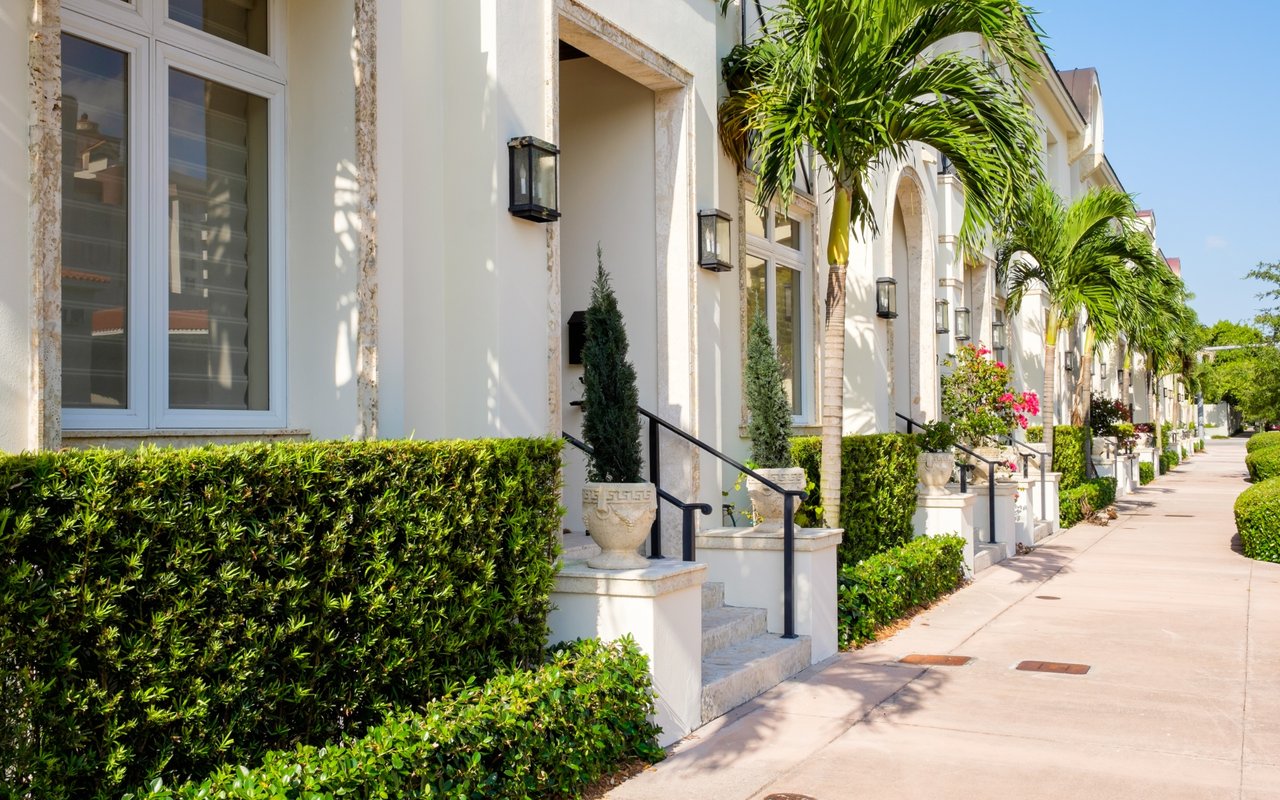
Walk Hibiscus Street on any given morning and the block looks like it hasn't changed since Calvin Coolidge was in office. Rough stucco walls, barrel tile roofs, wrought iron balconies, oak and banyan canopy thick enough to keep the pavement in shade past nine a.m. Nothing about that picture is scheduled to change. What's changed sits in two documents that surfaced within days of each other this month: a city council agenda for its Tuesday, September 8 meeting, and a museum website that went live with the neighborhood's own name in the description of a brand new film.
One is a proposed construction contract. The other is a documentary, already finished. Read them together and they say something neither one says on its own: the same century-old fragility that makes these blocks worth filming is exactly what the city is now moving to fix.
What the City Had Scheduled
The Boca Raton City Council was scheduled to take up Resolution No. 112-2026 at its Tuesday, September 8 meeting, authorizing a contract with Ric-Man International for what the agenda calls the Old Floresta Infrastructure Upgrades Project. The public description is a single sentence: construction work to improve infrastructure in the neighborhood. No street-by-street map, no completion date, nothing more specific has been published yet. That's normal for this stage. The agenda also showed the scale of the city's broader capital work. The same meeting was also set to take up the 32nd Street Seawall project, a downtown civic area master plan, and the city's full 2026-27 budget and tax rate. Old Floresta's streets aren't an isolated fix-it item. They're one line in a capital works push the city is funding this cycle, alongside seawalls and civic buildings that have their own aging problems to solve.
If you live on one of these blocks, the practical takeaway right now is simple: there's no published construction schedule yet. The Historical Society's website is a strange place to look for utility updates, but it's a fair reminder of why the timing matters.
Streets Built for a Different Century
Old Floresta occupies a compact footprint, roughly two blocks wide and eight blocks deep, tucked just north of Palmetto Park Road. It was laid out in October 1925, when Addison Mizner announced he'd build houses there for his company's executives and for his brother, the Reverend Henry Mizner. Nobody involved in that decision was thinking about stormwater capacity for a city of what Boca Raton has since become.
That gap between 1925 engineering and 2026 demand is visible in something as simple as walking the streets. Several of Old Floresta's blocks still have no sidewalks at all, a detail residents who walk dogs or push strollers already know to work around. The tree canopy that makes the neighborhood feel like nowhere else in Boca Raton grows from root systems that have had a hundred years to work their way into whatever pipe and pavement sits beneath them. None of that is a complaint. It's the reason a construction contract here is worth more attention than the same contract would get in a subdivision built in 2005.
The Museum Got There First
Days before the council was set to take up its own infrastructure item, on September 2, the Boca Raton Historical Society and the Schmidt Boca Raton History Museum launched an eight-part digital film series, streaming free at bocahistory.org/films. Each film runs just over a minute, narrated by an AI voice built from recordings of museum curator Susan Gillis. One of the eight episodes is built entirely around Old Floresta, described as one of only 29 homes built as part of Mizner's original 1920s vision for the city and called one of the best-preserved glimpses of what he set out to build before the Florida land boom collapsed in 1926.
The Boca Raton Tribune reported Gillis saying the goal was to "put them in front of people wherever they are, on their phones, on social media, wherever they're scrolling." For a neighborhood whose entire identity rests on physical detail that most visitors only see from a car window driving through, that's a genuinely new way in.
Two Houses That Carry the Story
The short version of how Old Floresta came to exist involves a contractor, a foreclosure, and a rebrand. The Robinson Company, the same New York outfit building Mizner's Cloister Inn, won the contract for the 29 houses. When the 1926 land bust hit before construction finished, the Mizner Development Corporation collapsed, and the Chicago partners who'd sold Mizner the land in the first place, led by Hermann V. von Holst, held the mortgage and foreclosed. Von Holst oversaw completion of the unfinished houses, proposed new names for the streets, and suggested calling the subdivision Floresta, Spanish for a delightful rural place.
Two of the surviving houses from that era carry official city designation today: the Aiken House at 801 Hibiscus Street, built around 1926, and the Lavender House at 875 Alamanda Street, also from around 1926. Both sit on the flower-named streets von Holst laid out a century ago, and both are protected under the same 1990 designation that made Old Floresta Boca Raton's first historic district. The Boca Raton Historical Society says that any exterior change to a house here needs a certificate of appropriateness from the city before work can start, which is a large part of why the streetscape still looks like 1926 even as the ground underneath it doesn't.
What to Watch For Over the Next Few Months
Nothing about the infrastructure project is disruptive yet, and no construction schedule has been published. If crews do mobilize, expect some temporary detours on the narrower blocks. Gumbo Limbo Nature Center sits a short drive away if a stretch of your usual walking route ends up blocked for a few days, and it's worth the trip on its own merits.
In the meantime, the film series is the easier thing to act on. Each episode runs about a minute, the Old Floresta entry is already live, and it's a genuinely different way to see a neighborhood most people, including plenty of longtime residents, have only ever driven through rather than looked at closely.
Old Floresta's infrastructure has appeared on the city agenda, and the neighborhood's story has been documented, both in the same season, and that's not a coincidence so much as a reminder. A hundred years is a long time for pipes. It's an even longer time for a story to sit untold, and this month, both finally got some attention.
If you're curious about a specific house on Hibiscus or Alamanda, or want a straight answer on what historic district designation actually means for a property you're watching, Maximo Cortese is happy to walk through it. Schedule a free consultation anytime.
This article is general information, not legal, tax or financial advice. Consult a qualified professional about your situation.